The five hundred
A pandemic, a vaccine, and a sentence that is true and still leaves almost everything out. What Covid, and any pandemic, asks of a government and of the people it looks after.
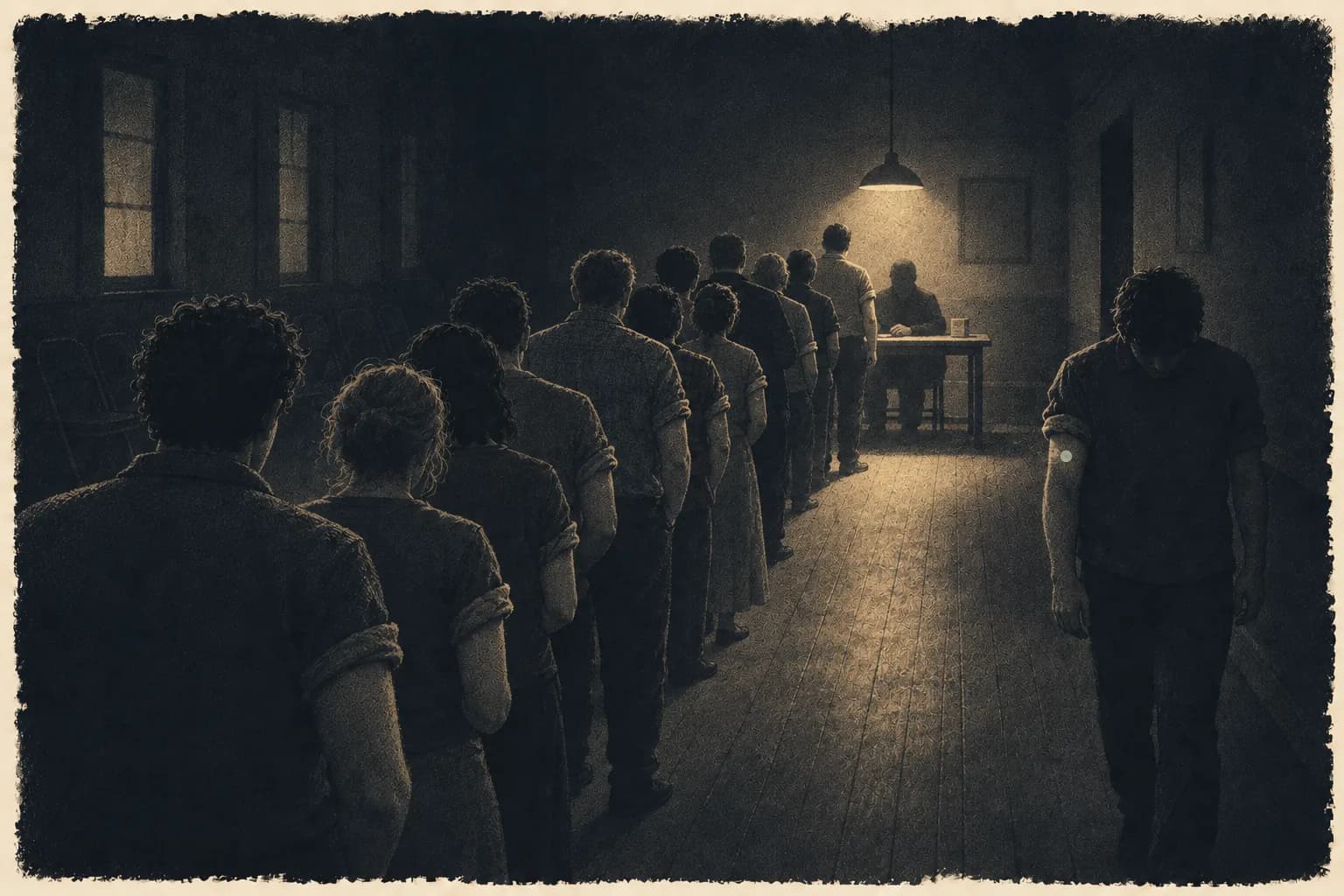
Picture a country of a million people, and a disease that will kill roughly 300,000 of them. The other two thirds survive. Some are very ill for weeks. Some barely notice they had it.
The numbers are invented. No real disease is this tidy, and Covid’s were far smaller on both sides. I picked them because they are big enough to see, and because the shape they make is the same in every pandemic.
The arithmetic
Then a vaccine comes along. Give it to every one of the million, and instead of 300,000 deaths there are 5,000.
Those 5,000 are two different groups. 4,500 of them would have died either way; the vaccine did not save them and it did not kill them. The other 500 are the hard part. They died because they were given the vaccine, and they would have lived without it.
In the other column are 295,500 people who would have died and did not. For every person the vaccine killed, it saved 591.
And nobody can tell in advance who is who. There is no test that picks out the five hundred before the needle goes in, and none that tells you whether you are one of the 300,000 either. Everyone rolls up a sleeve knowing the same thing: the odds, and not their own place in them.
A true sentence
So there will be people who say: vaccines are not needed, and people have died after getting one.
The second half of that is objectively true. Five hundred people did. They have names and families, and the families are not wrong to be angry.
What the sentence leaves out is everyone else. The 295,500 who are alive do not know they were saved. Nobody gets a letter saying: you would have died in March. They had a sore arm for a day and got on with their lives. The five hundred are visible. The people who were saved are invisible, even to themselves.
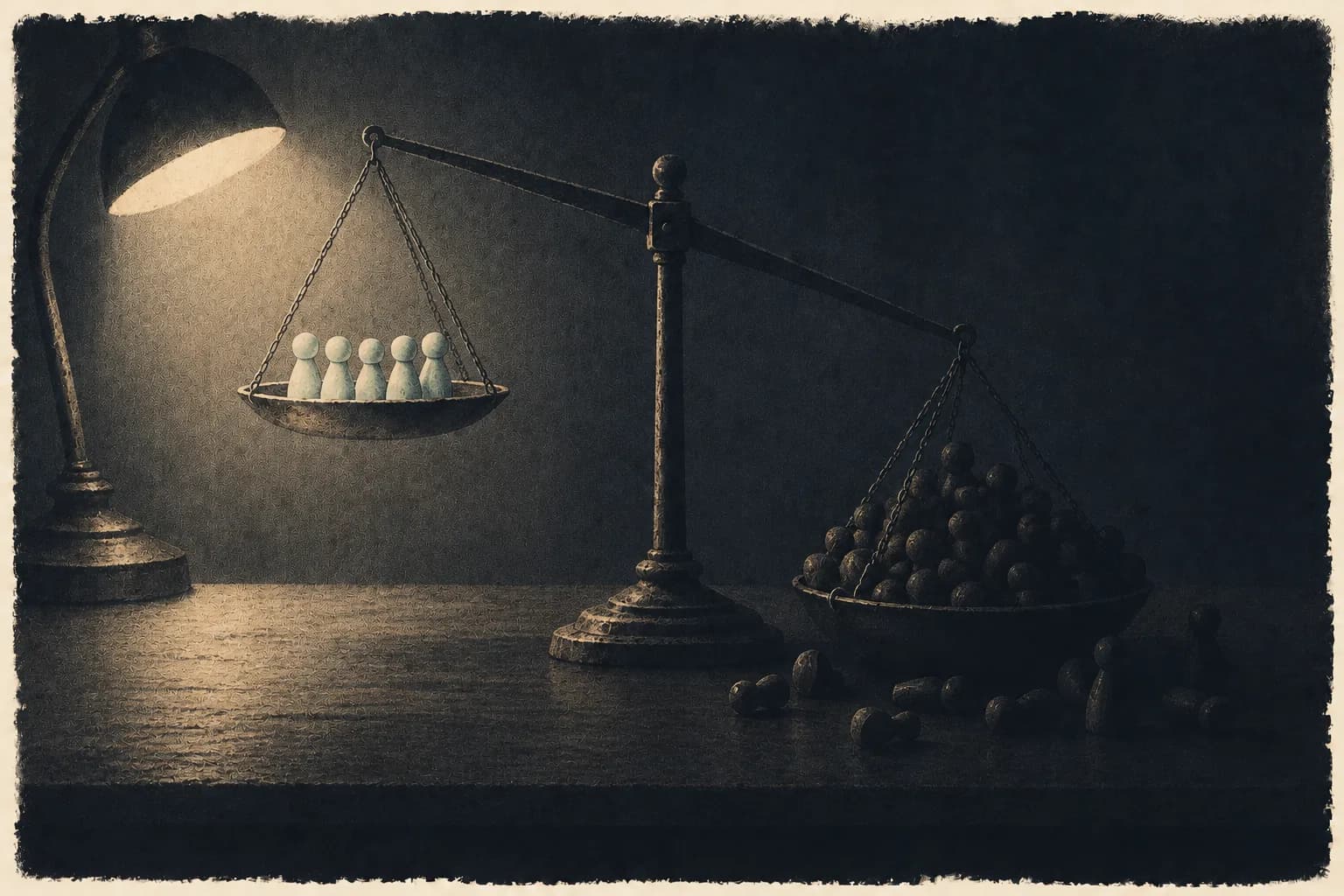
That is how a true statement ends up carrying a false conclusion. It counts one column and conveniently leaves out the other.
The decision
The role of a government is to take care of its people, and often that means making tough decisions. This is one of them. It is 300,000 deaths against 5,000, and whoever signs the order knows that five hundred of the 5,000 are theirs.
I think the decision is the right one, and I do not think it is close. But deciding is only half the job. The other half is saying it out loud.
Say the whole thing
Communication is key, and I mean something specific by that. In a pandemic, a government should say clearly, and often, what the vaccine does. That many people will be saved. That a hell of a lot more will be saved than harmed. And that harm will happen.
The last sentence is the one that gets dropped. I understand why: it sounds like an admission, and it frightens people. But leaving it out does not make the five hundred go away. It only means that when the first of them dies, the public hears about it from someone else, as a revelation, from a person who will not mention the other column.
Say it first, with the numbers, and it stops being a revelation. Yes, people died after the vaccine. We told you they would. We told you how many, and how many more would have died without it.
None of this is special to Covid. Any pandemic with any vaccine has the same two columns, and so will the next one.
Taking the chance
One more thing should be said plainly, and it is the uncomfortable one. Taking the vaccine is a risk. It is a small one, made as small as anyone knows how to make it, and it is not zero. Everyone who takes it accepts a tiny chance of being one of the five hundred, and that is how 300,000 becomes 5,000.
That is not nothing, and it should not be described as nothing. We need people to be heroes and take the chance. I would rather be asked that in plain words than be told there is no chance to take.